Personal Review
My take on this trail.
The Ride
This is the trail I ride most. Not because it's the best trail in the city — I'd give that to Tommy Thompson — but because it's mine. It's five minutes from my front door, it runs for 19 kilometres, and on any given Tuesday evening it's the place I go when I need to move and think and not deal with traffic.
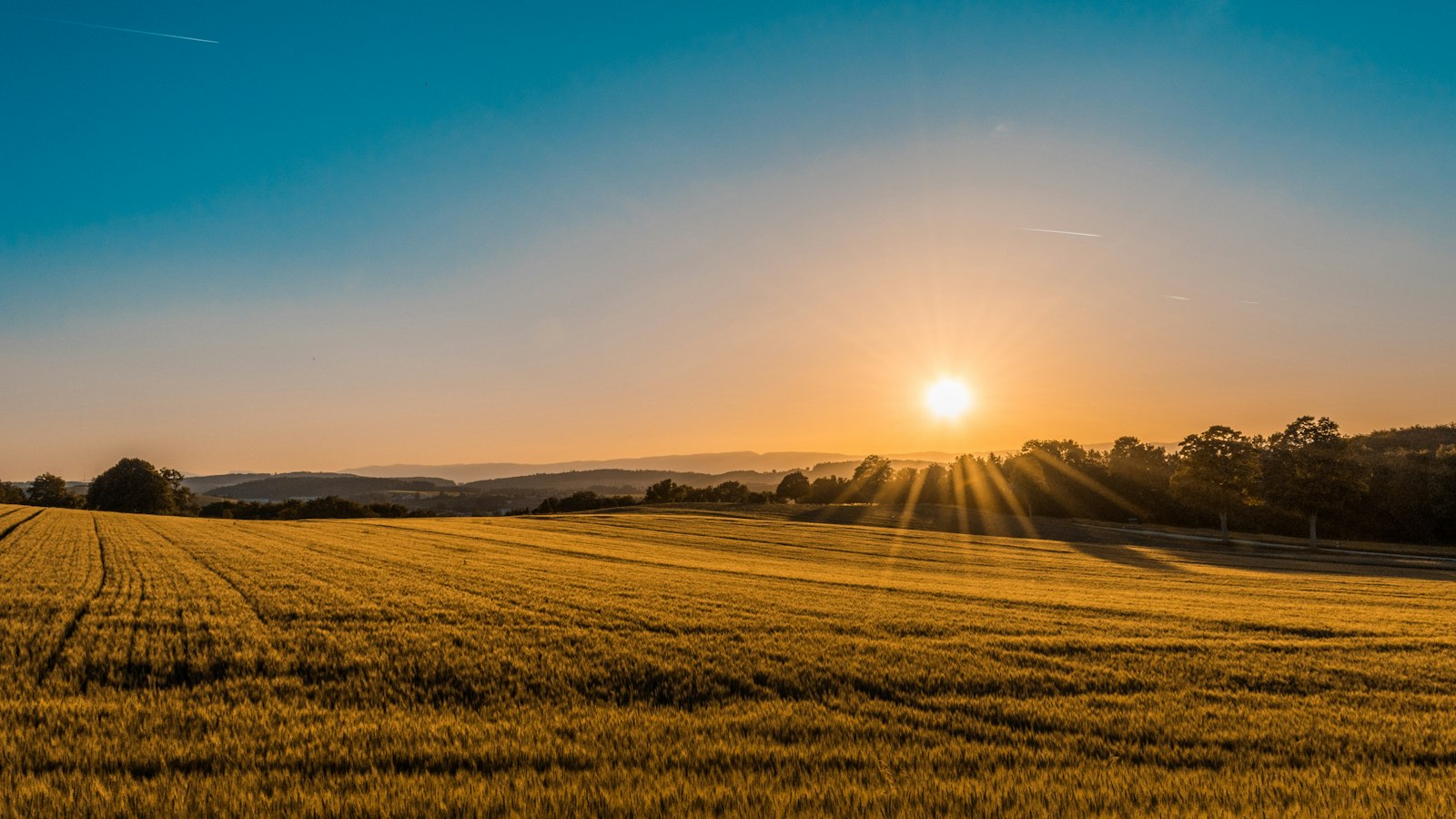
The first thing you notice is the sky. Without trees or buildings to frame it, the sky out here is enormous — wider and taller than anywhere else in the city. And beneath it, the grass. Tall and dense — knee-high by midsummer, running the full length of the path on both sides. When the wind moves through it, the whole field shifts at once, a wave of green rolling from one end of your vision to the other. Sometimes it's scattered with wildflowers. Sometimes it's just grass, and that's enough.
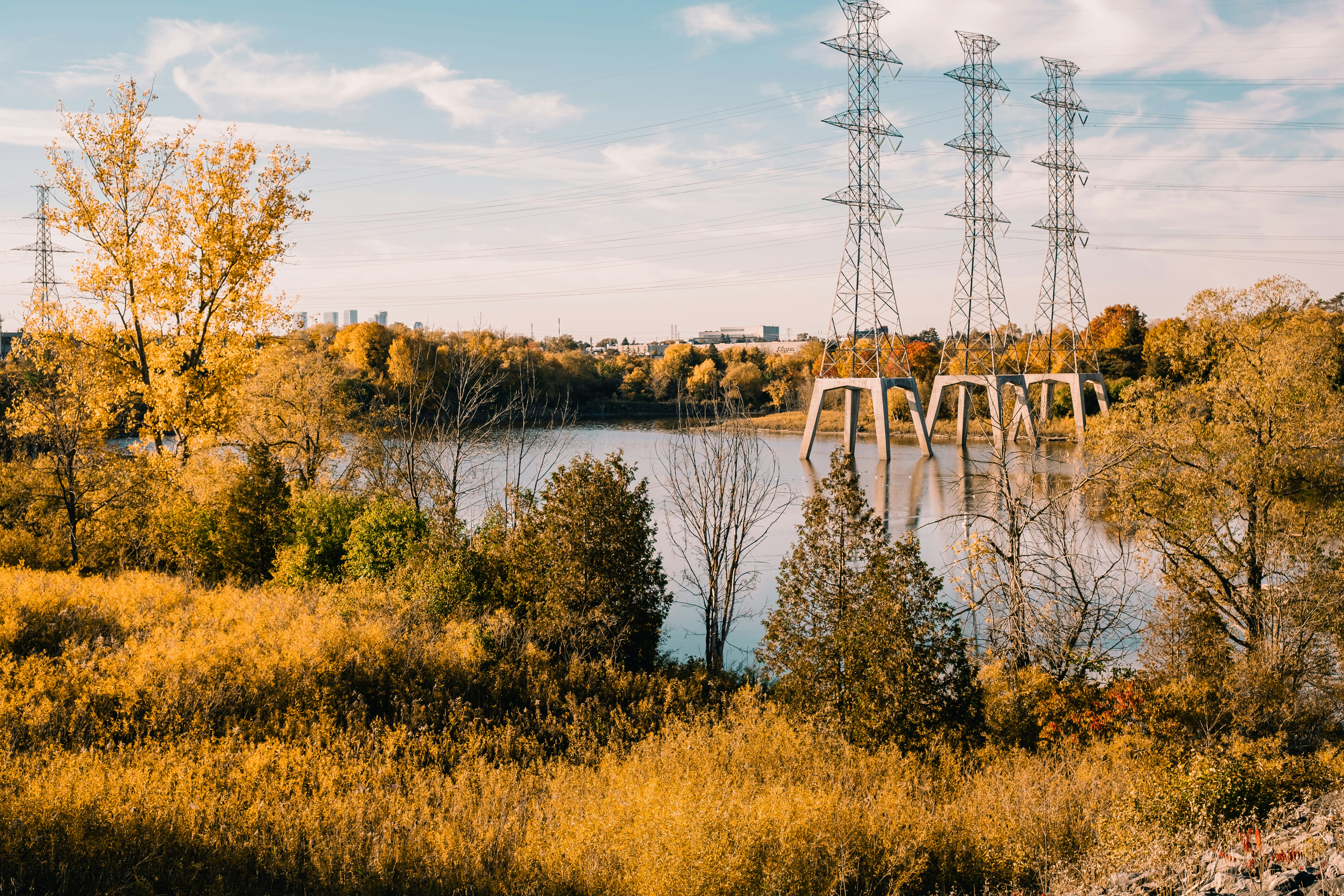
Above the grass, the transmission towers. They march along the corridor, the power lines humming a low constant note. Most people wouldn't call them beautiful. I would. There's something about their scale and repetition that gives the trail a visual rhythm you feel in your body.
And then the wildflowers. This is the contrast that makes the trail. In spring and early summer, the fields fill with colour — purple vetch, goldenrod, Queen Anne's lace, scattered through the grass in patches that nobody planted and nobody tends. There are power lines overhead and wildflowers at your feet, and somehow the combination works. The corridor wasn't designed to be beautiful. It just is.
The path itself is gently curving — long, slow bends that straighten out and curve again, over and over for 19 kilometres. Riding them feels like a moving meditation. You don't have to make decisions. You don't have to navigate. The path curves and you follow it, and after a while your mind does what it wants to do when you stop directing it. Thoughts come and go. You notice things — a hawk, a cloud, the way the grass changes colour near a drainage channel. It's the closest I get to meditating, and I don't have to sit still for it.
This trail doesn't announce itself. There's no dramatic payoff, no famous landmark at the end, no moment where you stop and say "this is it." What it has is 19 kilometres of open sky and the particular peace of a place you return to so often it becomes part of your rhythm. I've ridden it dozens of times. I'll ride it dozens more. It's the trail that doesn't ask anything of me except to keep pedalling.
Two Spots Worth Stopping For
The first is the East Don River descent — the only real hill on the entire trail, and it arrives so unexpectedly that the first time I hit it, I genuinely laughed. You're cruising along the flat, open corridor and then the path opens up ahead of you and the ground drops away, winding down a long, controlled descent toward the East Don River valley below. It's not steep enough to be dangerous, but it's steep enough to feel it — the wind picking up, the bike accelerating, the corridor's flat rhythm suddenly and completely broken. At the bottom, the East Don River Trail connects, and the world changes. Above you: open sky, grass, transmission towers. Below: a forested ravine, narrow path, the sound of water. Two completely different trails meeting at a single hill. If you have the energy, ride down into the ravine for a few minutes. The contrast between the two — the corridor's openness and the valley's enclosure — is one of the best things about this part of the city.
The second is G. Ross Lord Reservoir, sitting wide and calm near the middle of the trail. It's one of Toronto's less-known waterfront moments, and all the better for it. I've sat here more times than I can count, catching my breath on a bench at the water's edge, watching the sun glisten off the surface while the grass moves in the field behind me and the city hums somewhere out of sight. The reservoir is surrounded by open parkland — no fences, no crowds, just water and sky and the particular quiet of a place that most people drive past without knowing it's there. After the steady rhythm of the corridor, arriving here feels like a natural full stop.
A Trail for All Four Seasons
The Finch Hydro Corridor is more season-sensitive than most Toronto trails because it's fully exposed — no canopy, no shelter, nothing between you and whatever the sky is doing. That sounds like a disadvantage. It's not. It means you notice the signs of seasons changing more clearly here than almost anywhere else in the city.
Spring is when the trail comes back to life. The grass turns that particular shade of new green that only exists for a few weeks — bright, almost luminous. The wildflowers start to arrive, scattered at first, then everywhere. The air smells different. The light is longer. This is the best time for the full 19-kilometre end-to-end, when the trail feels renewed and the wind is still gentle.
Summer means full sun exposure all day, and I mean all day — there's no shade on this trail. Go early morning or late afternoon. The grass is at its tallest and most ocean-like, moving in waves. Bring water, wear sunscreen, and if you can time it right, ride to G. Ross Lord Reservoir in the late-afternoon light. The water in late summer is at its most beautiful — warm colours, long reflections, the kind of light that makes you stop and just sit for a while.
Fall is when I love this trail most. The grass turns amber and gold, and the whole corridor takes on that particular autumn quality — warm colour, cool air, the sky a deeper blue than any other season. The descent toward the East Don is especially dramatic when the ravine below has started to turn, orange and red filling the valley while the corridor above stays open and golden. You can see the season arriving from up here. You can watch it move through the landscape in real time.
Winter strips the trail back to something austere and elemental. The grass is gone. The fields are brown and flat. The transmission towers look different against a grey sky — starker, more present, their geometry sharper without the softening effect of green. It's not the most comfortable ride. The wind off the open corridor is cold and steady, and the path can be icy after a freeze. But there's a particular beauty to having the trail almost entirely to yourself, riding through a landscape that's been reduced to its simplest elements: sky, ground, path, forward.
Every season gives you a different version of the same trail. That's rarer than it sounds.
Worth Knowing
Why this trail is better than its reputation
The Finch Hydro Corridor is consistently overlooked in conversations about Toronto's best trails, and I understand why. It doesn't have the obvious selling points. No waterfront. No ravine canopy. No famous landmarks or lookout points. If you described it to someone who'd never ridden it — "a paved path under power lines through North York" — you'd lose them before you finished the sentence.
But what it has instead is something harder to describe and more valuable to the right kind of rider: uninterrupted open space in the middle of a dense urban grid. The hydro corridor exists because the transmission lines need a cleared right-of-way — nobody can build underneath them. The side effect is this long, open, car-free ribbon of sky and grass cutting across North York, from Yonge Street to Jane Street, 19 kilometres of space that wasn't planned as a trail. It just became one. People started walking it, then cycling it, and eventually the city paved it and let it be what it wanted to be.
Sometimes the best urban spaces are accidental. Sometimes the infrastructure creates the poetry. The power lines made the corridor. The corridor made the trail. The trail made a place where you can ride for almost an hour without hearing a car horn or waiting at a stoplight, and the grass moves like water, and the sky is bigger than you thought the city could hold.
I keep coming back because it's close, because it's quiet, and because after dozens of rides it still feels like mine.